
Everywhere you turn right now, it’s “New Year, New You!” Fresh starts, bold goals, and complete reinvention. But for many of us, this moment in the calendar may not feel like a season of transformation.
Why the New Year Feels Hard in Winter
The initiation of our new calendar year begins in the dead of winter. In the natural world, winter brings about feelings of hibernation, seclusion, maybe reflection, but most of all hopes for comfort and safety. Yet, in our modern era, this is when we try to force ourselves to set new goals, dream bigger, and create something entirely new. If you ask me, the new year should begin closer to the spring equinox, when the days stretch longer, the air warms, and we see new life in the budding plants.
So, if you aren’t feeling that natural pull for a reset right now, you’re not alone. Instead, let’s stop chasing the new and return to what’s essential.
“Make Thinking the Minimum”
In early December, Thinking Nation invited history educators to do exactly that through a new pledge: “Make Thinking the Minimum.” Our Executive Director, Zachary Coté, explained the pledge in this way:
“While many initiatives try to break through the ceiling of what is possible (and we love them for it!), this initiative is about establishing a better floor for what the minimum should look like for our students. It’s about calling ourselves back to the definition of our discipline, quality pedagogy, and sustainable collaboration.”
That idea — calling ourselves back — feels especially right as we turn the page on a new calendar year.
As we step into 2026, what if we resist the rush toward what’s new and instead choose to return to the bedrock of our discipline and, truthfully, what has always mattered most for students in history education?
-1.png)
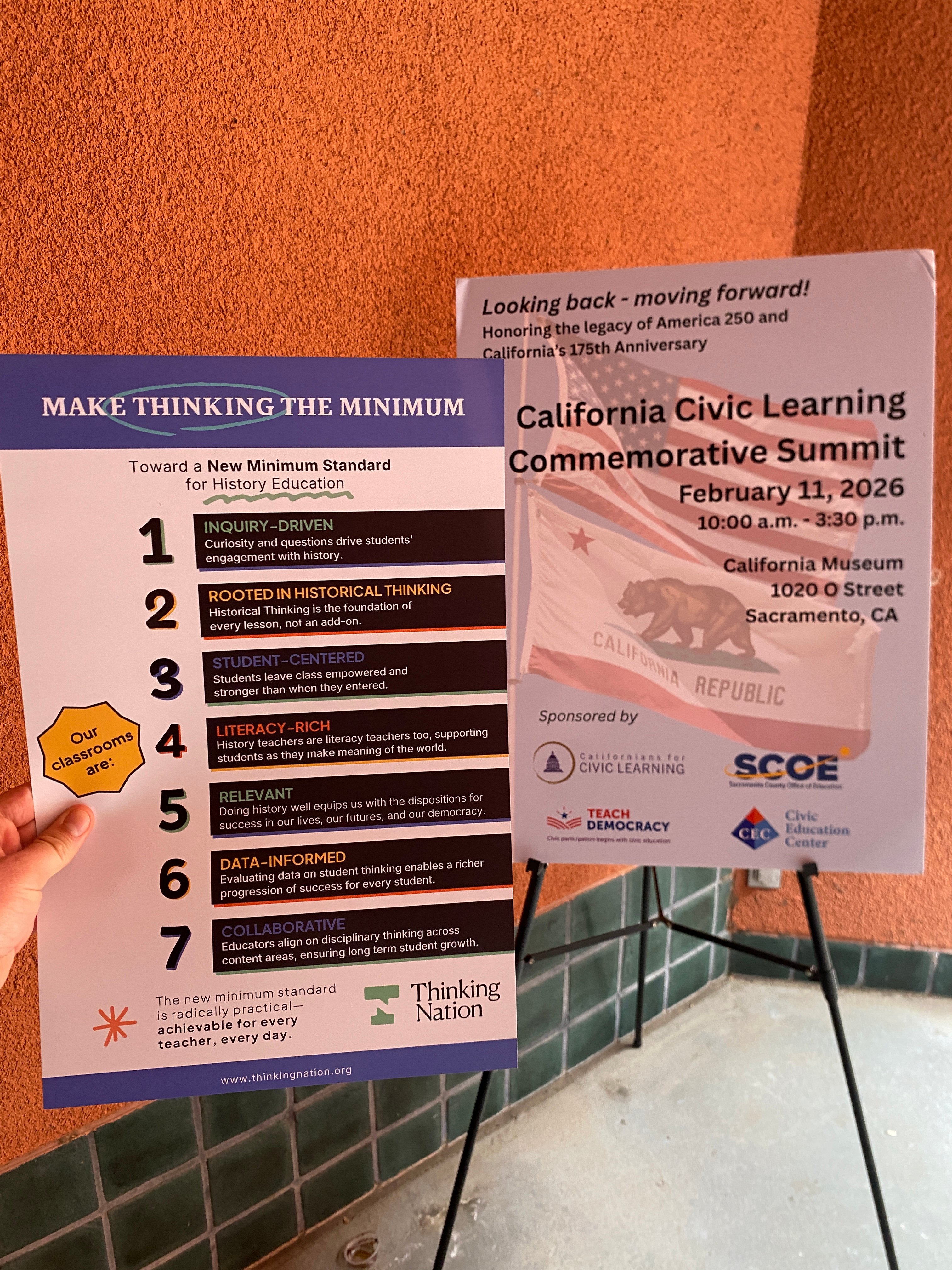
These seven components—Inquiry-Driven, Rooted In Historical Thinking, Student-Centered, Literacy-Rich, Relevant, Data-Informed, and Collaborative—aren’t meant to feel like one more thing to add. Chances are, you can probably name lessons that already incorporate them. Take some time to picture one of those lessons. Where do you see these commitments showing up? How did that impact student learning? Do you recall deeper engagement, critical thinking, and stronger growth?
If this feels like the kind of history education you believe in, please join us and sign the pledge!
The Commitments Behind Our Practice
Across our team, we’ve been reflecting on what these commitments mean in practice.
These reflections look a little different from when we were in the classroom but still correlate to the roles we play in history education.
Which of the seven components would you like to be more intentional about this month to encourage stronger historical thinking? Drop us a comment. We’d love to hear what you’re focusing on.
In the coming weeks, our blog and newsletter will be spotlighting these pledge components and providing realistic, classroom-ready ways on how to incorporate them into your practice more consistently.
And if you’re a school leader who loves the pledge, let us know. We are already partnering with a school to turn the pledge into a PD series, and we’d love to explore how we can support strong, inquiry-driven history classrooms in your building and district.
Post a comment