

Can you play soccer without a soccer ball? Can you have a dance without music? Can you cook without food?
If you’re thinking I’ve developed some trick questions with the intent of talking about ingenuity, well… you’d be wrong. The answer is pretty simple: No, you can’t. You can’t do the above activities without the above components because they are integral to the thing itself. Each component is a part of the definition of the activity.
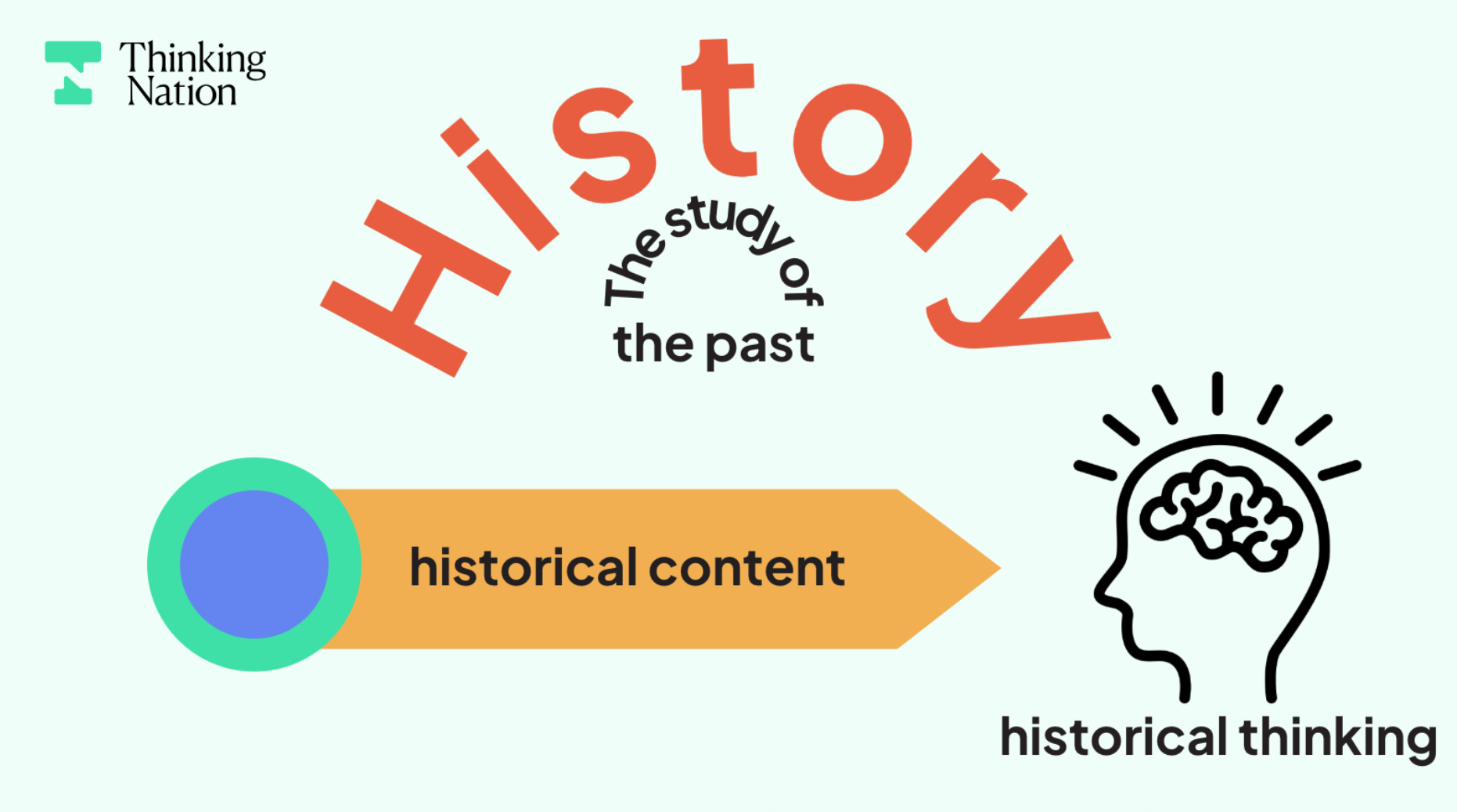
Likewise, you can’t teach history without historical thinking. It’s integral to the field. It’s inherent to the discipline. If history is a discipline, it’s defined by an epistemology—a way of thinking. History requires historical thinking.
Unfortunately, a lot of students (and frankly, adults) don’t know this. To them, history is interesting stories about dead people. Or maybe timelines. Or fun facts. Now, history may contain those things, but that doesn’t make it those things. Like humans, history is more than just the sum of its parts. History is a discipline, a methodology for understanding the past. Historical thinking is what we do.

A “Minimum” Standard
When we began drafting the New Minimum Standard for History Education: “Make Thinking the Minimum,” this was a point we continuously stressed. The standard was designed to be attainable because it was designed to stay true to the definition of history. We aren’t looking to shatter glass ceilings of what is possible. We simply want there to be a baseline acknowledgment of what history actually is and then consider the implications of that definition. That’s it. It’s a new minimum standard.
If this is something you can get behind and haven’t signed the pledge yet, I’d love for you to do so.
So if history is the study of the past and historical thinking is the toolbelt for us to do that well, how do we make that clear for students? How do we make the implicit, explicit?
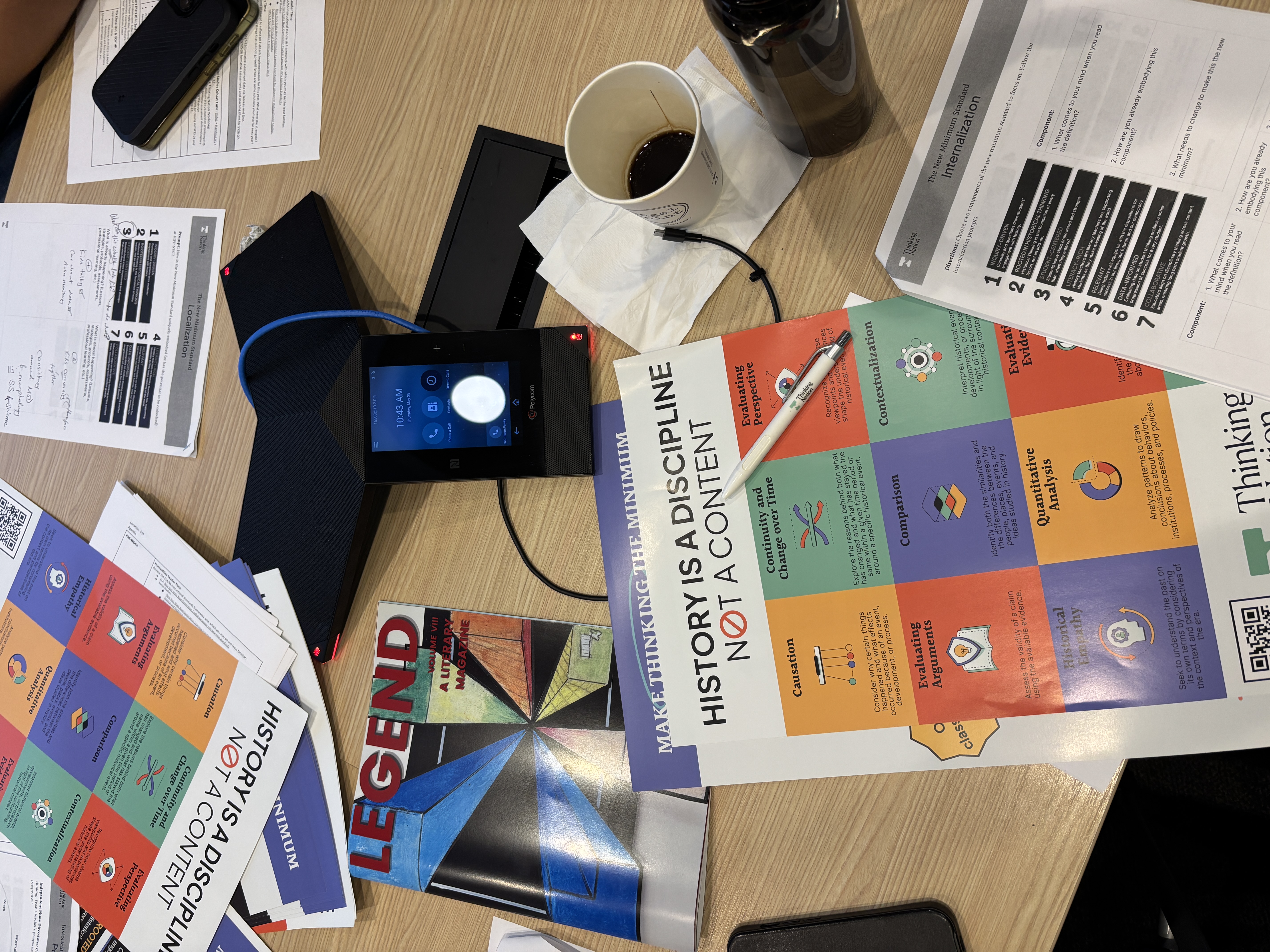
We must name the historical thinking skills we use regularly and make them the anchors of our classrooms. This is why, over the last few months, we created a new Youtube series: Historical Thinking Skills Explained. The series consists of 10 videos, one per thinking skill, that highlight the definition, implications, and significance of each historical thinking skill. These are great videos to orient ourselves as educators or to show our students when introducing them to each skill. If you’re looking for an accessible entry point to make the implicit, explicit, start here.
When we name the skills and then anchor our classes around them, we make the implicit thinking processes of the historian explicit for our students. This way, students are not merely concerned with what they are learning, but how they are coming to know what they know. Historical thinking skills are a vessel toward understanding. They open up our minds to see beyond the final product, but illustrate the deep and meaningful process behind historical knowledge. Facts don’t just appear. They are discovered; and discovery takes work.
If you are looking to go beyond the videos, consider using these one page guides for each historical thinking skill. These guides introduce the skill to students, address how they work and their significance, and then give students some simple practice to internalize the skill. They are great for setting the tone for what matters in a history classroom.
Finally, as we continue in this series dedicated to our New Minimum Standard, we’d love to also hear from you! Last week’s blog explored why inquiry matters and this one looked at historical thinking skills. How do you lead with those components of the pledge in your classroom? We want to know! We’d love to feature your story here to inspire educators around the country. Fill out the form and tell us the cool things you are doing!
Post a comment