Yesterday, I spent the day in Sacramento, CA with civic educators and students from across California. Thanks to Californians for Civic Learning and the civic fortress that is Michelle Herczog, a meaningful day of inspiration and collaboration took place just steps away from the State Capitol building.
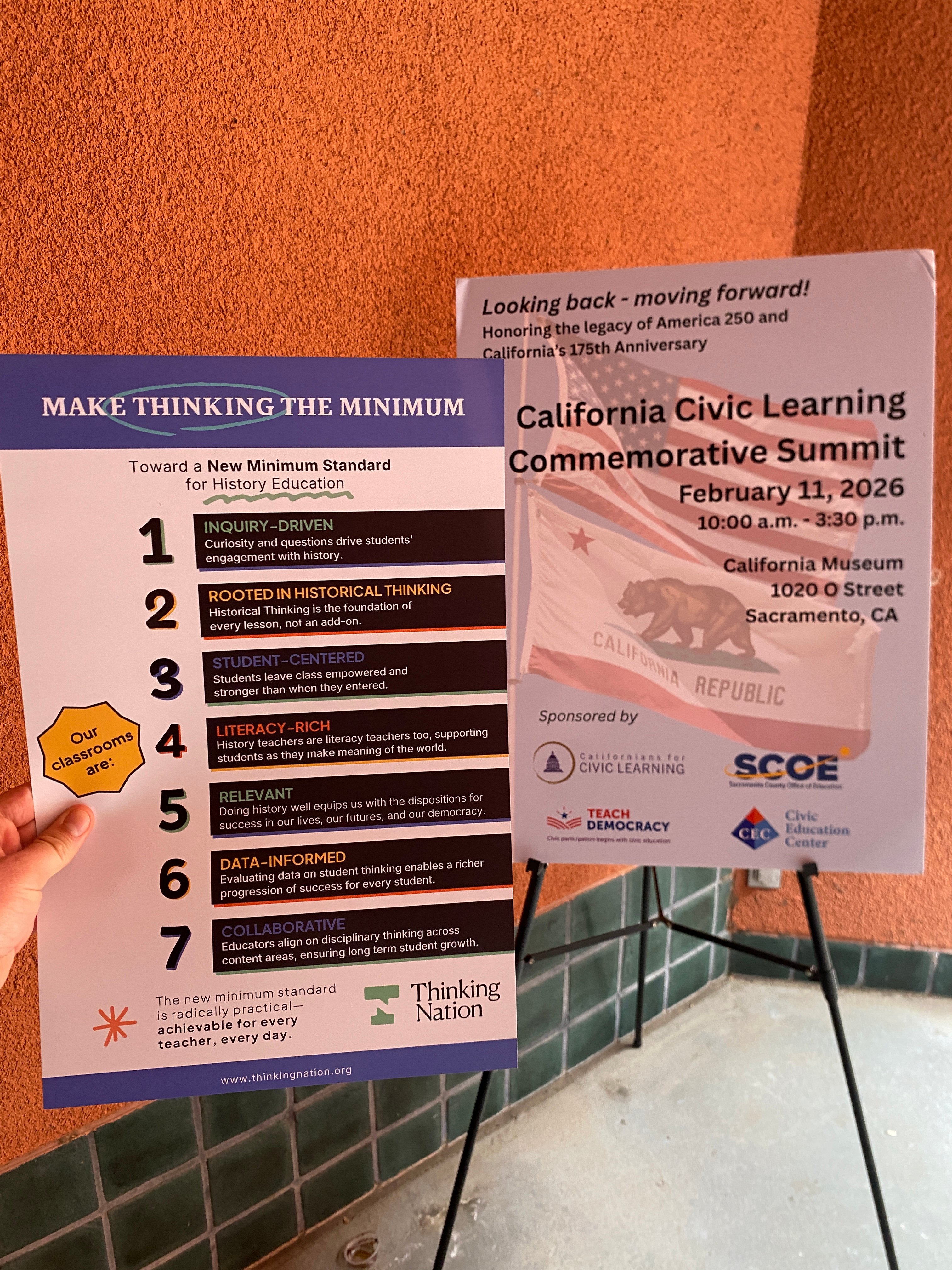
The New Minimum Standard meets the CA Civic Learning Commemorative Summit
As speakers and panelists spoke, I felt encouraged about the importance of our work at Thinking Nation. California Senate President pro Tempore Monique Limón reminded us why the rule of law matters, students and teachers shared concrete ways civic learning has come to life in their classrooms, and Dean of the UC Berkeley School of Law, Erwin Chemerinsky weaved the philosophical underpinnings of constitutionalism with practical and relatable circumstances we can look at today. Amidst all of this, I continued to think about our New Minimum Standard.
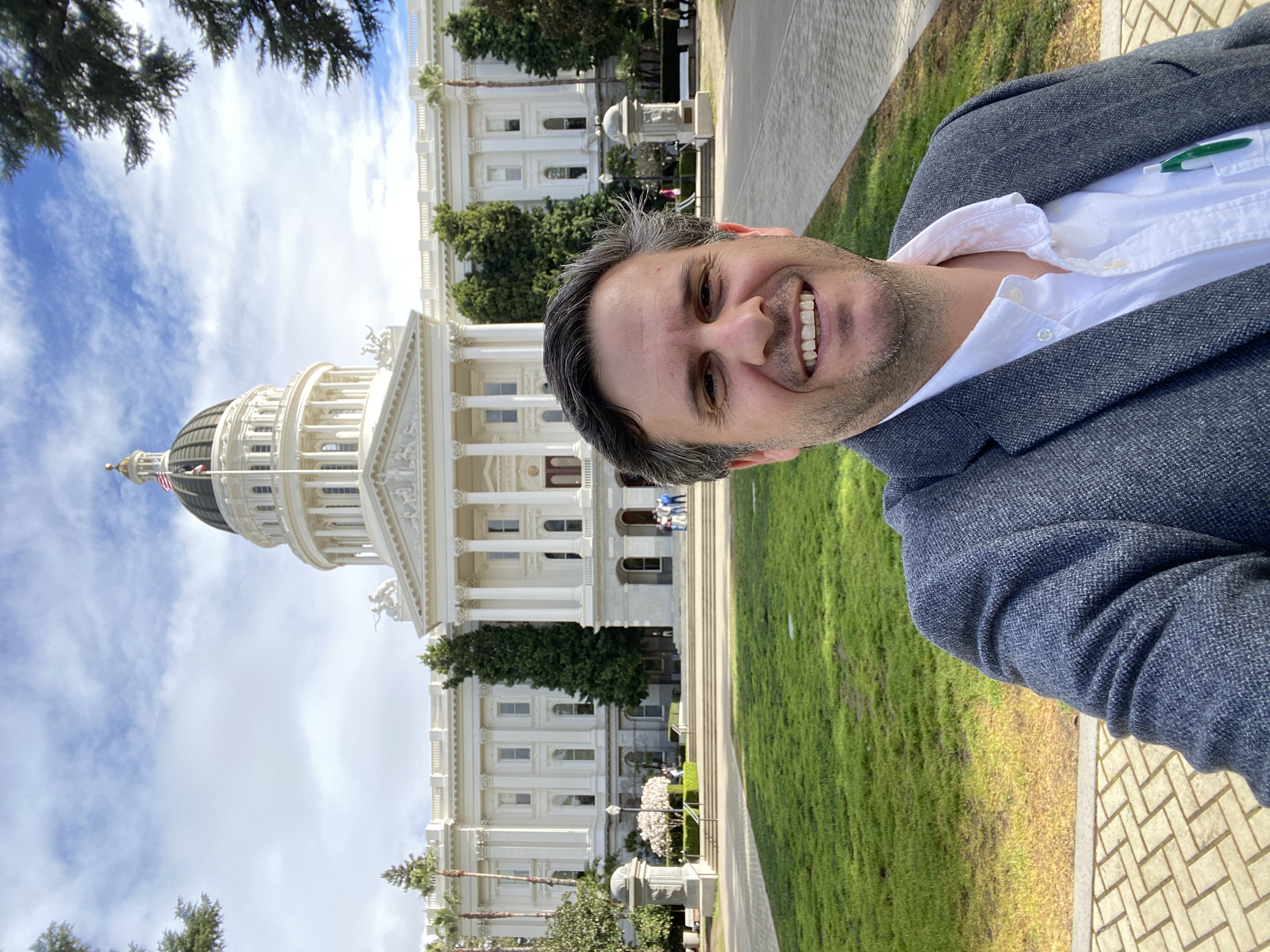
Me being a nerd taking a picture with the California State Capitol
At Thinking Nation, we believe that when we “make thinking the minimum” in our classrooms, we are equipping students with the agency to be thoughtful and engaged citizens. They see value in their curiosity and in the same way they construct their own arguments about the past in our classes, they begin to construct their own arguments about the world they see beyond the classroom walls. We give them the tools to do this well. They learn to follow the evidence, contextualize the stories, and empathize with the diversity of perspectives they encounter. Historical thinking doesn’t just set them up for classroom success, it sets them up for life success. These dispositions are invaluable.
Students who engage in history classrooms that practice the New Minimum Standard get regular practice in the civic dispositions our democracy craves. These are transferable skills that create a more thoughtful citizenry and workforce. Historical thinking centers humanity in an age of AI and humility in a narcissistic culture. This is why this new minimum standard must be seen as the minimum, or the floor, of what quality history education is. If it is perceived as a “may do” rather than a “must do,” the status quo will remain and the democracy’s cracks will only get bigger.
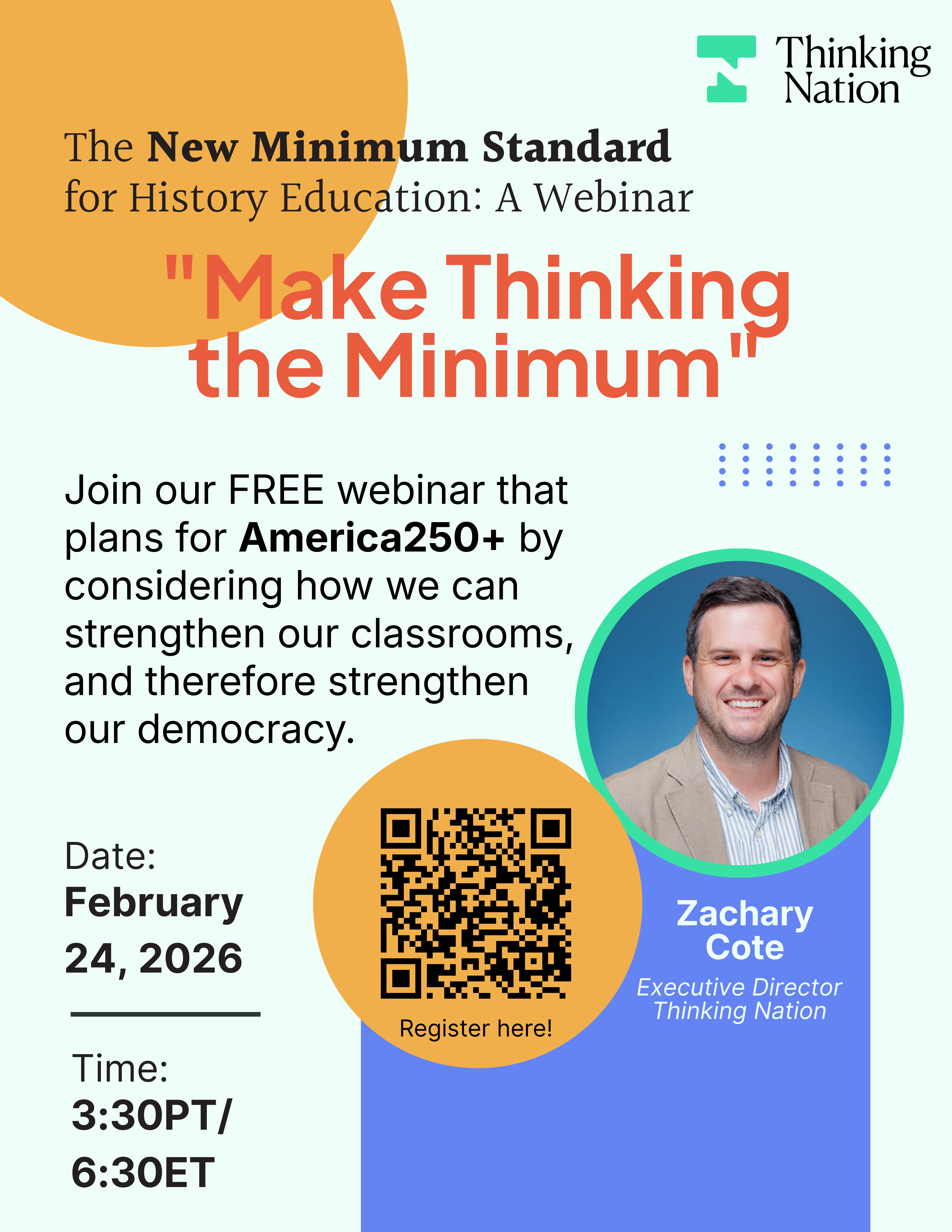
I’m excited to dive deeper into this “why” at our upcoming webinar on February 24th. During the webinar we will break down the pledge, talk about why this matters, and discuss practical strategies to bring this pledge to life in our classrooms. When much of the nation will commemorate the past for America’s 250th birthday (don’t get me wrong, we will too!) this pledge and webinar is designed for us to consider the future.
What does America250+ look like? How do we strengthen our constitutional democracy through our small but might lane of history education?
I hope you join the webinar as we explore how!
Post a comment