
[Spoiler Alert: There is a great free resource to help teachers embody the “relevant” component of the New Minimum Standard at the end of this post]
As a bright-eyed 21-year-old in my teacher credential program at California State University, Channel Islands, one of my professors loved to remind us of the three R’s of good teaching: Rigor, Relationships, and Relevance. I loved this class. The professor was both quirky and passionate and had such a heart for the youth that educators serve. To this day, I stand by those three R’s. They have guided my own teaching. Still, as I have grown into who I am as an educator, the term ‘relevance’ has changed in its meaning.
As history educators, we are often told to make history relevant for our students, or to their lives, to avoid them seeing history as just stories about dead people. We hope that students can “see themselves” in the history we teach and apply the lessons of the past to the present. Now, while I think there are some merits to this line of thinking, I think this misses the point of history education. Also, it’s not what we mean in our New Minimum Standard when we identify ‘relevance.”
Let me explain:
History is the study of the past. Of people from a time and place not like our own. It’s the study of change over time. In some cases, as Frederick Douglass wrote in 1884, “The past is…the mirror in which we may discern the dim outlines of the future.” But in many cases, it magnifies our view of humanity precisely because it is not a mirror. In a world of echo chambers, social media that perpetuates narcissistic tendencies, and self-centered choice-making, history requires us to look beyond ourselves. In a past defined by tribalism, xenophobia, and a general fear of the unknown, history asks us to understand people not like us. It is its foreignness, rather than its relevance, that helps us grow as humans.
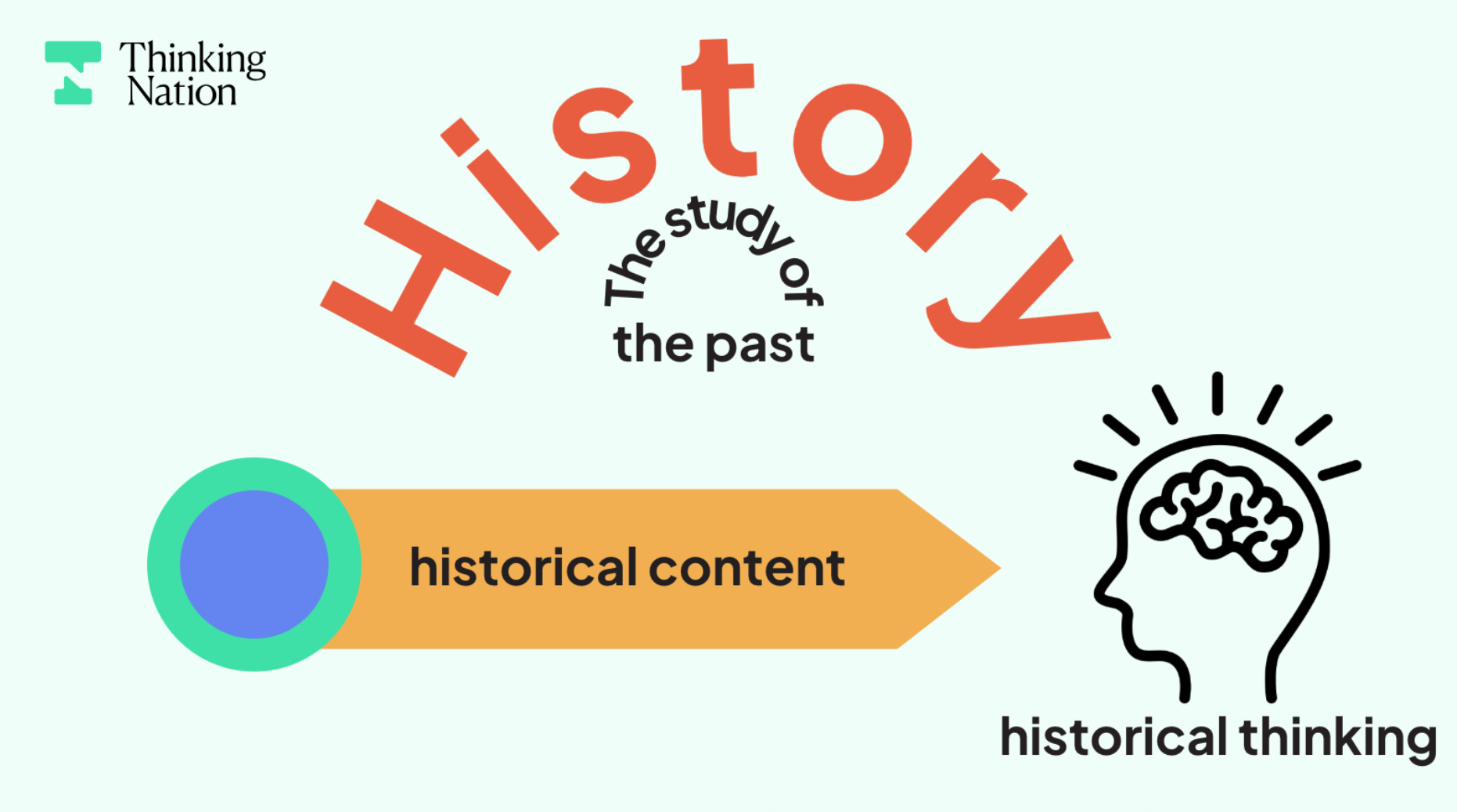
Then, why include “relevance” in our new minimum standard? Because as a discipline, history is far more relevant to our present than the past that we study. The past is the vessel for historical inquiry, deeper understanding, and practice with robust thinking skills. In our New Minimum Standard, we acknowledge relevance by saying that “Doing history well equips us with the dispositions for success in our lives, our futures, and our democracy.” Historical thinking empowers.
When we root our classrooms in historical thinking and inquiry— in the discipline of history rather than the content of the past—we are cultivating the students in our classrooms in ways that best prepare them for success in the world beyond our classroom walls. They learn to contextualize new stories, empathize with diverse perspectives, assess causality in the moments they experience, evaluate evidence and arguments, and compare. These skills make us more human. They are deeply relevant to success. They embody many of the “portraits of a graduate” that school districts and states are pursuing. And they don’t demand that we develop whole new courses or after-school programs.
If we can uphold the New Minimum Standard in our classrooms, we may be making the past more relevant for our students, and that is fine. But, more importantly, we are making our students more relevant for their present and their future. This is the type of preparedness that education must pursue. Our students deserve it and our democracy depends on it.
As with all our other “New Minimum Standard” blog posts, we don’t want this to just live in the abstract. We want to provide concrete ways for teachers to embody the New Minimum Standard in History Education. Of course, our school partners have access to many ways to do this, but we wanted to provide an easy-to-implement activity created by our Director of Curriculum, Annie Jenson, to support you.
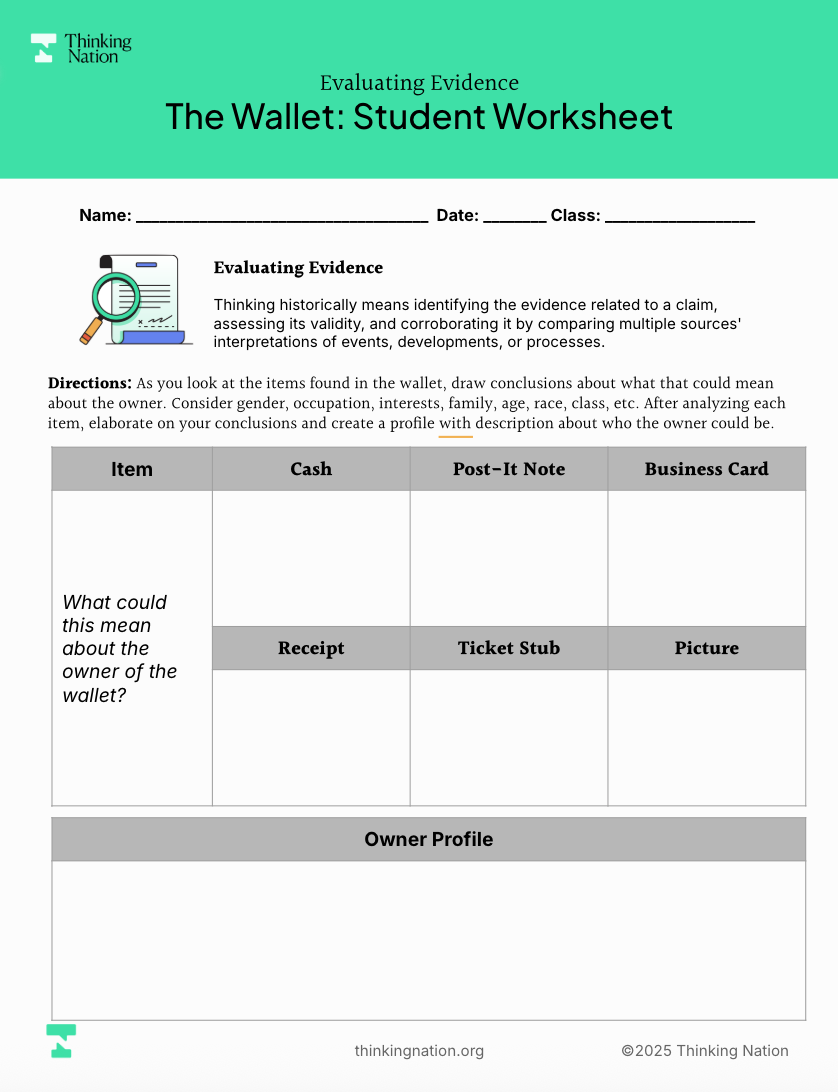
Check out this great back-to-school activity called “The Wallet” where students get to practice some of the historical thinking skills core to a discipline-centered history classroom. We hope it is helpful.
Enjoy the final moments of summer! (Except for those schools we’ve already begun working with this week and are in it! You got this!)

Post a comment