
If you’ve been following Thinking Nation this year, you’ve seen (and hopefully signed!) our New Minimum Standard campaign. We strive to empower students through the discipline of history, and every student, regardless of age or location, deserves to be in a class where thinking is the minimum.
Last week, we finally rounded out the blog series on all 7 components of the new minimum standard, so as our final stragglers in the back-to-school season (I’m looking at you, post-Labor Day schools) prepare for students, I thought it would be good to highlight the 7 components (and their corresponding free resources) in one blog post.
You can read each original post by clicking the hyperlinked title.
.png)
Let’s get to it! The New Minimum Standard is:
Without inquiry, we may have the past, but we don’t have history. Leading with questions and then following where the evidence leads us is the role of a historian. But often, students are only presented with the final product of that inquiry. We have our students read other historian’s conclusions, or the consensus of a group of historians. Maybe our students just engage with chronology and miss out on all of the scholarly context that enabled a historical picture to be painted with clarity. If that’s the case (and frankly, most high stakes assessments reward us for making that the case), we are robbing our students of the discipline we fell in love with. We may be teaching them about the practice, but we are not cultivating practitioners.
Try out this free resource that introduces students to asking questions with a DOK framework as well as introduces them to historical epistemology!
Rooted in Historical Thinking
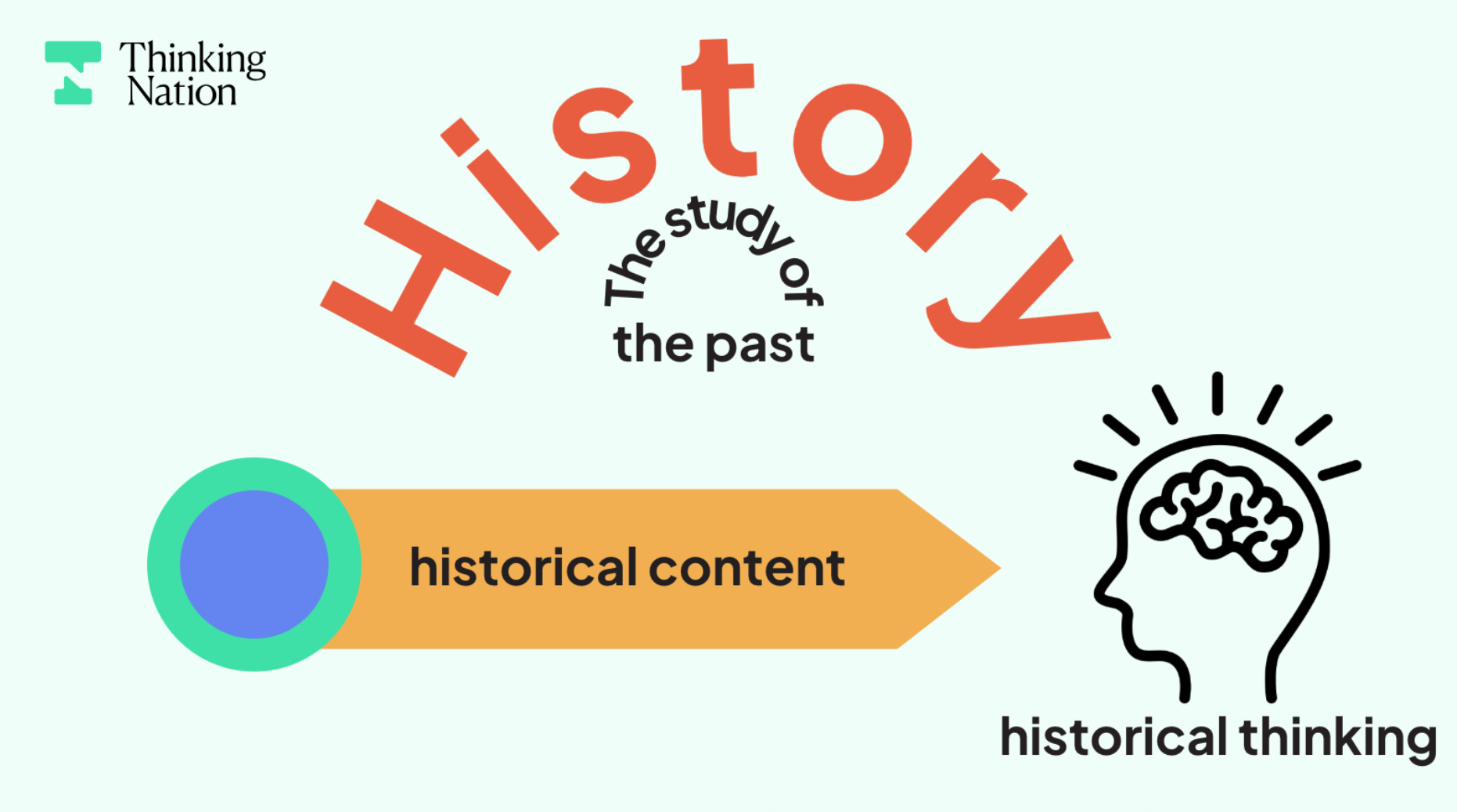
You can’t teach history without historical thinking. It’s integral to the field. It’s inherent to the discipline. If history is a discipline, it’s defined by an epistemology—a way of thinking. History requires historical thinking.
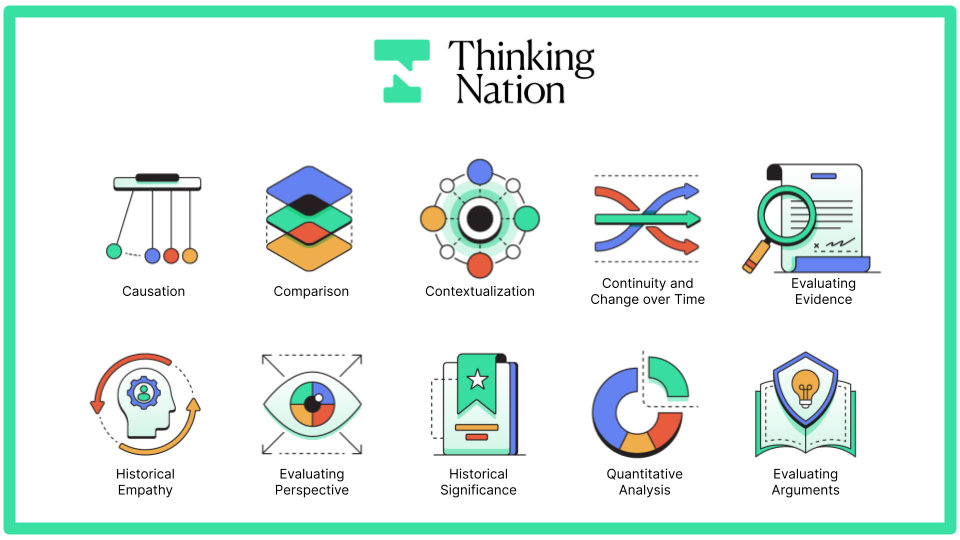
We must name the historical thinking skills we use regularly and make them the anchors of our classrooms. This is why, over the last few months, we created a new Youtube series: Historical Thinking Skills Explained. The series consists of 10 videos, one per thinking skill, that highlight the definition, implications, and significance of each historical thinking skill. These are great videos to orient ourselves as educators or to show our students when introducing them to each skill. If you’re looking for an accessible entry point to make the implicit, explicit, start here.
In our New Minimum Standard pledge, we write, “Student-Centered: Students leave class empowered and stronger than when they entered.” To us, then, a student-centered classroom is one where the end goal is student empowerment. One where students exhibit intellectual agency to inquire about interesting questions, pursue those answers, and learn how to do so in an integral way. Student-centered is human-centered, where the rights and responsibilities that make us human are prioritized. This makes supporting a student-centered classroom a civic imperative.
With this in mind, student-centered does not mean that we cast our classrooms (or the past) in our students’ image. It means we set up a classroom that deepens their human connection, both to the people in their present and the people of the past. It also means that we provide students with a toolbelt that enhances their own agency.
In the spirit of student-centeredness, we hope you try out this free lesson that asks students to internalize the historical thinking skill of contextualization and then apply it to themselves.
Good historians are literacy professionals. It is for this reason that we advocate that the minimum for a history classroom is that it is literacy-rich.
We’ve seen the studies that show that social studies is the single greatest determining factor in literacy gains. We’ve advocated for the consistent use of primary sources in history classrooms (and won a grant to further their impact!). We know that students who engage with the discipline of history walk out of our classrooms as stronger readers, writers, and analysts. Doing history well is literacy.
Ensuring that our classrooms are literacy-rich ensures that students have the tools to better understand the world around them, whether the world is defined by their neighbor, a book, artificial intelligence, or the news.
If you’re looking for ways for students to engage with the discipline of history and practice literacy skills, check out this lesson that takes various “fallacies” from one of my favorite books, Historians' Fallacies by David Hackett Fischer. (Free PDF of the book here!).
As a discipline, history is far more relevant to our present than the past that we study. The past is the vessel for historical inquiry, deeper understanding, and practice with robust thinking skills. In our New Minimum Standard, we acknowledge relevance by saying that “Doing history well equips us with the dispositions for success in our lives, our futures, and our democracy.” Historical thinking empowers.
If we can uphold the New Minimum Standard in our classrooms, we may be making the past more relevant for our students, and that is fine. But, more importantly, we are making our students more relevant for their present and their future.
Check out this great back-to-school activity called “The Wallet” where students get to practice some of the historical thinking skills core to a discipline-centered history classroom.
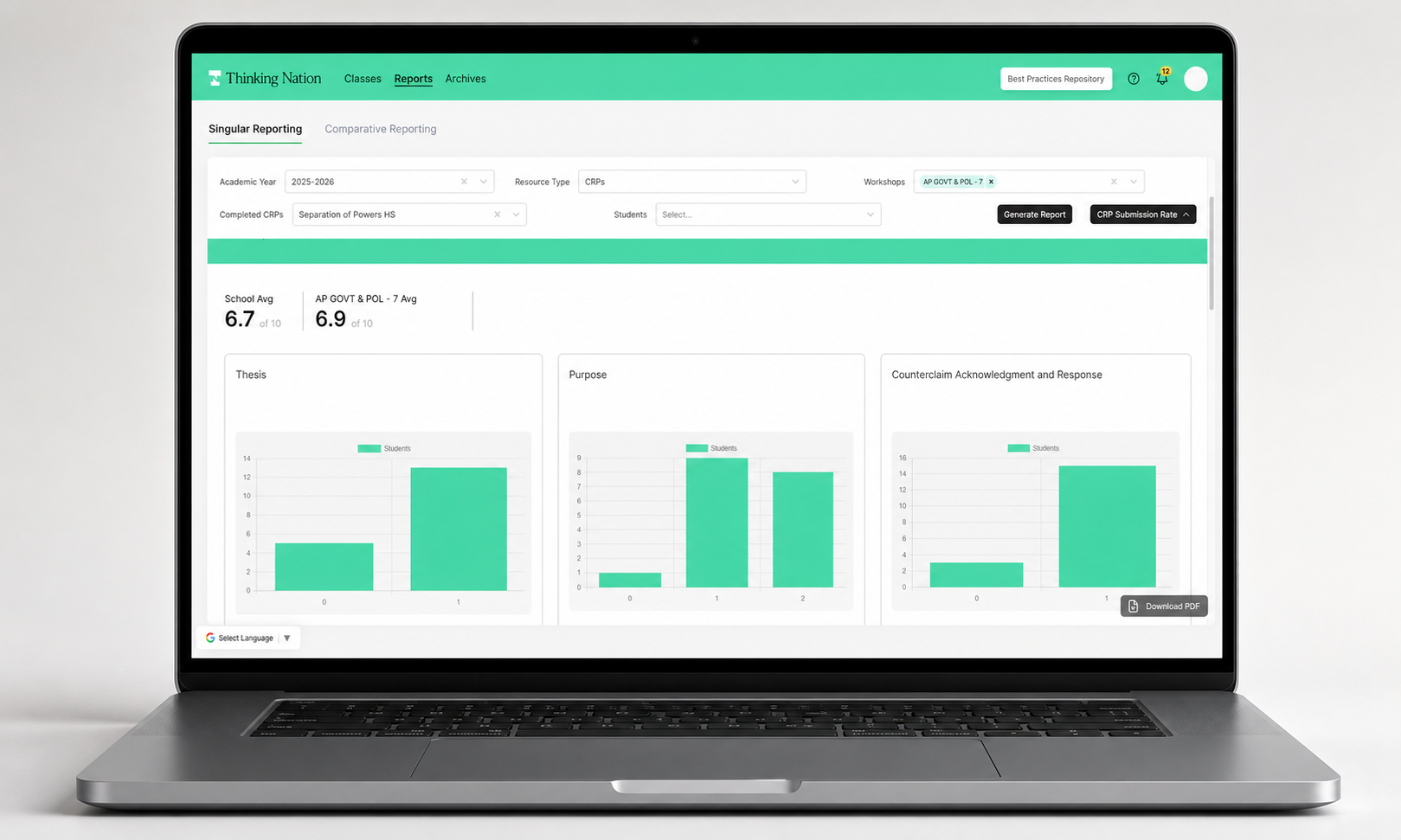
The new minimum standard in history education must be data-informed. This is why we are continuously making the data aspects of our online platform even stronger for our school partners.
Assessments matter because they serve as the data that informs our instruction. Even more, they serve as the data that informs our field and the state of education. This is why we emphasize our formative assessments on historical thinking and our summative assessments, which we call Curated Research Papers. These assessments provide data on dispositions that we value. The better that data is, the more informed our decisions are, and, the stronger our students are.
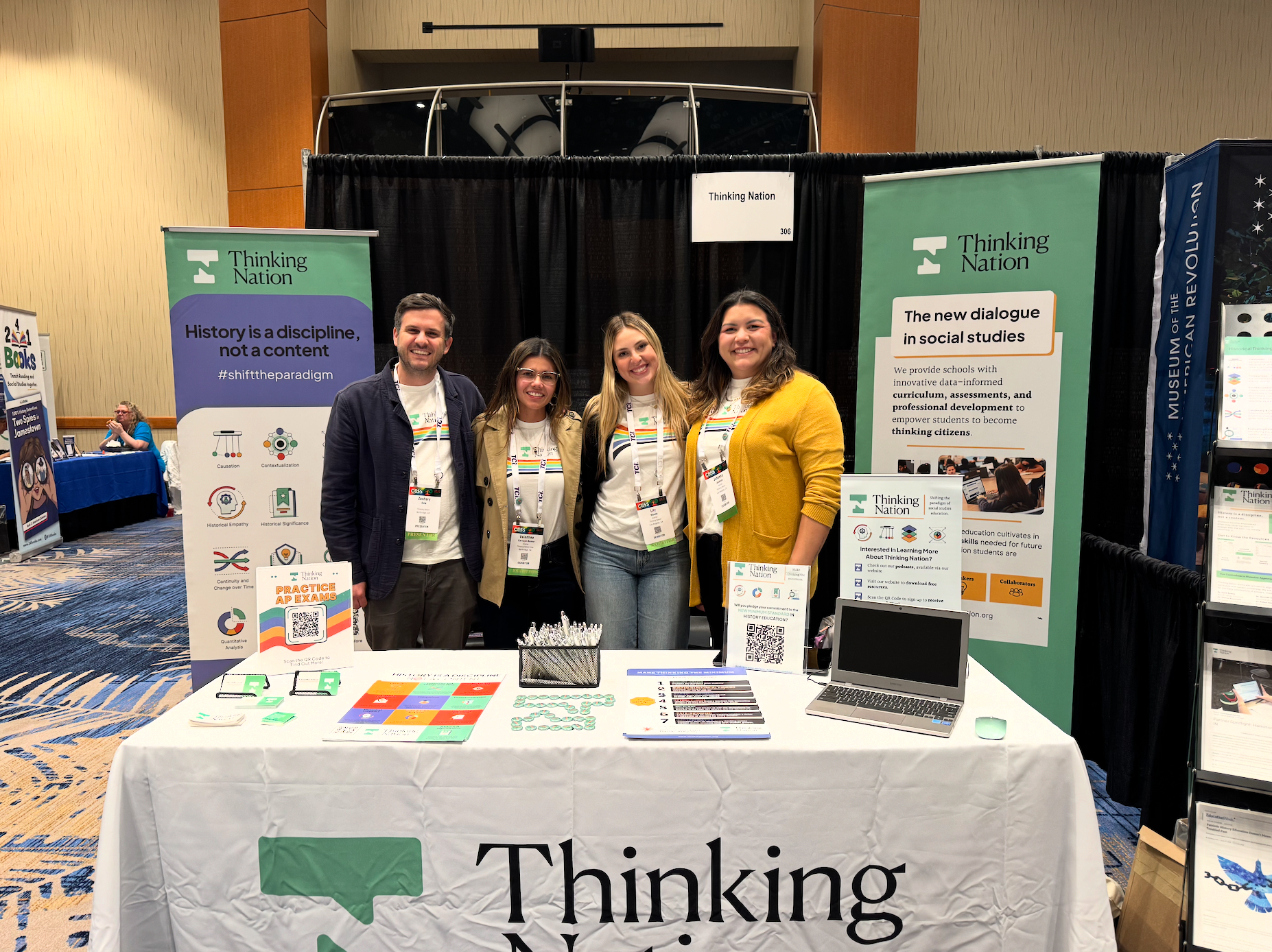
As our poster highlights, "collaborative" means “Educators align on disciplinary thinking across content areas, ensuring long term student growth.” We believe that the new minimum standard is one that breaks down the traditional silos defined by content and replaces them with robust collaboration marked by our teaching of an inquiry-based class that is rooted in historical thinking.

Check out this free protocol for facilitating effective Professional Learning Communities, or PLCs. By pairing this protocol with a focus historical thinking skill, teachers can collaborate without needing to teach the same content. This is how we build vertical alignment!

Post a comment