[Spoiler Alert: There is a great free resource to help teachers embody the “collaborative” component of the New Minimum Standard at the end of this post]
Remember when “collaborative learning” was all the rage? Or maybe it still is? I remember during my first year of teaching, we were all handed a huge Kagan Strategies book that had loads of collaborative (or cooperative, as they called it) learning strategies. Some were honestly good. Some just didn’t land.
Either way, the message we were receiving from our administrators as we ripped the cellophane off those brand new behemoths of books whose pages stuck together upon initial opening was simple: Do more collaborative learning!
“We want to see your students talking to each other.” “Have students facing each other in pods, not in archaic rows!” “Transform your dull classroom into an engaging one by swapping the individual work time for group!” You get the picture.
Now, as much as I’d love to go on and on about my thoughts on this topic, I want to make sure one thing is clear:
None of the above is what we at Thinking Nation mean when we say that the new minimum standard is collaborative.
So now that we’ve gotten that perception out of our systems, let’s dive into what we mean by collaborative.
Throughout this year of working with teachers (and lately, it’s been a jam-packed schedule!), we’ve stressed that the first five components of the new minimum standard directly deal with how students interact with history, but that the last two, data-informed and collaborative, focus on teacher-to-teacher responsibilities. There is a time and place for collaborative learning, but that is not what we are leaning into when we think of "collaborative" here.

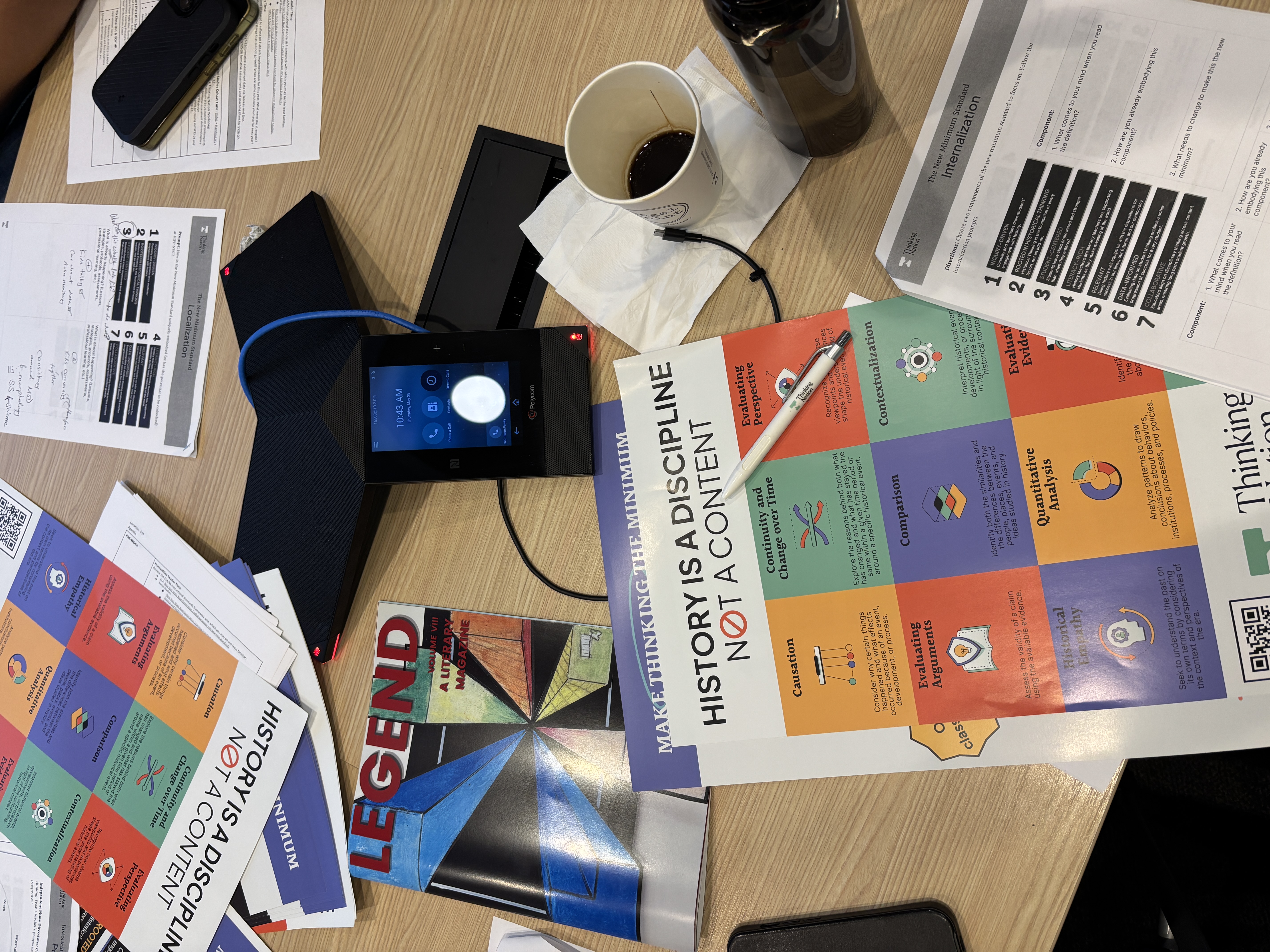
As our poster highlights, "collaborative" means “Educators align on disciplinary thinking across content areas, ensuring long term student growth.” We believe that the new minimum standard is one that breaks down the traditional silos defined by content and replaces them with robust collaboration marked by our teaching of an inquiry-based class that is rooted in historical thinking.
If history teachers cannot effectively collaborate around the disciplinary principles and skills that we are beholden to teach as history teachers, we are doing a disservice to our students.
When teachers don’t collaborate, students don’t see the throughlines between our classes. History feels like disjointed stories about dead people rather than a robust discipline with an inherent methodology that we can practice (and get better at!) over time.
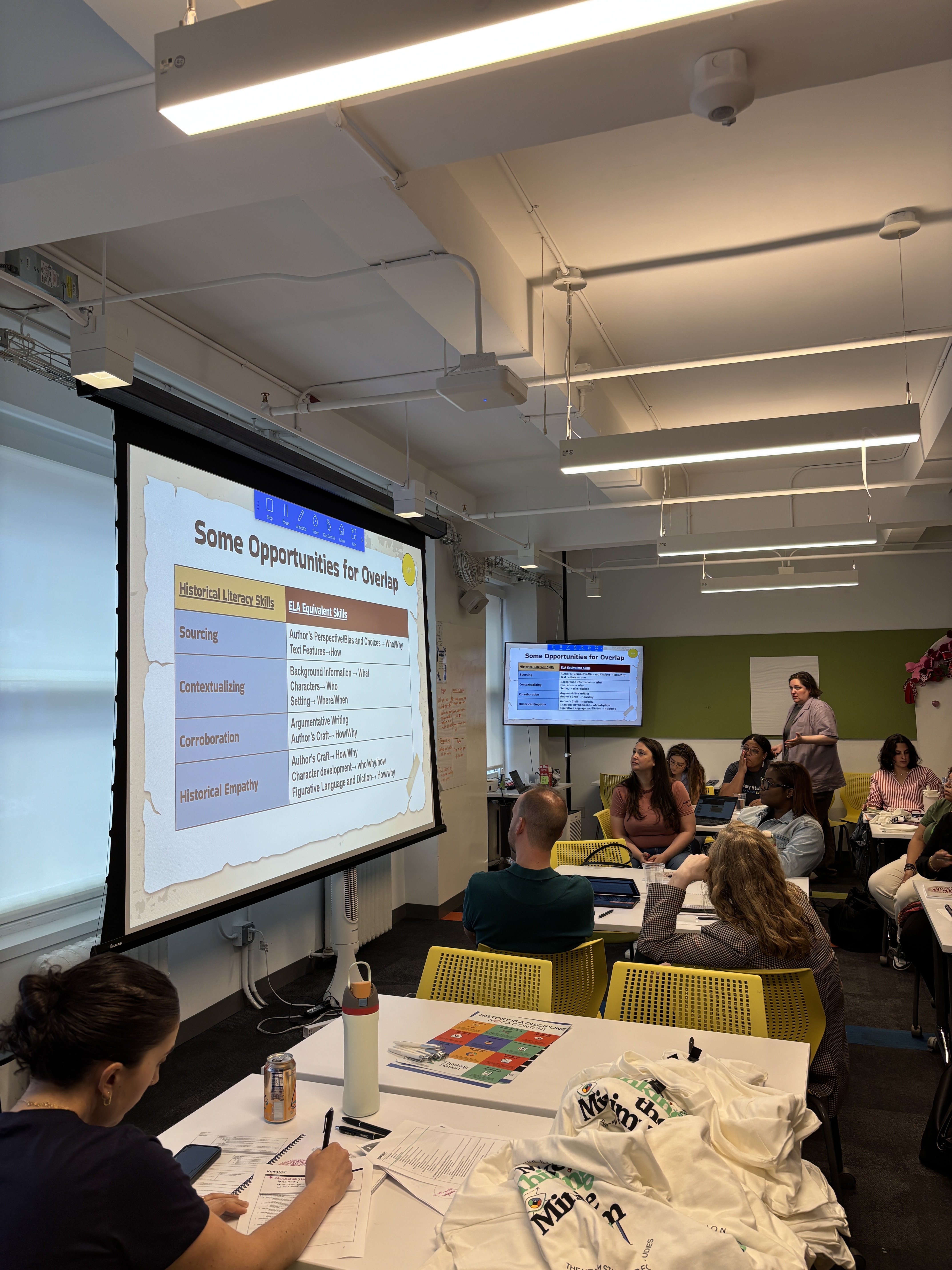
Teachers at KIPP: NYC collaborating around historical thinking skills
So, teachers: how are you being collaborative with your colleagues? How are you cultivating a common language for what you do and how you measure success that transcends content? What does that collaboration look like in practice?
Leaders: How are you creating the time and space for teacher collaboration? What types of structures are in place to ensure that there can be robust collaboration that is rooted in the disciplines found in social studies? How do teachers feel supported in this work (You are a collaborator, too!)?
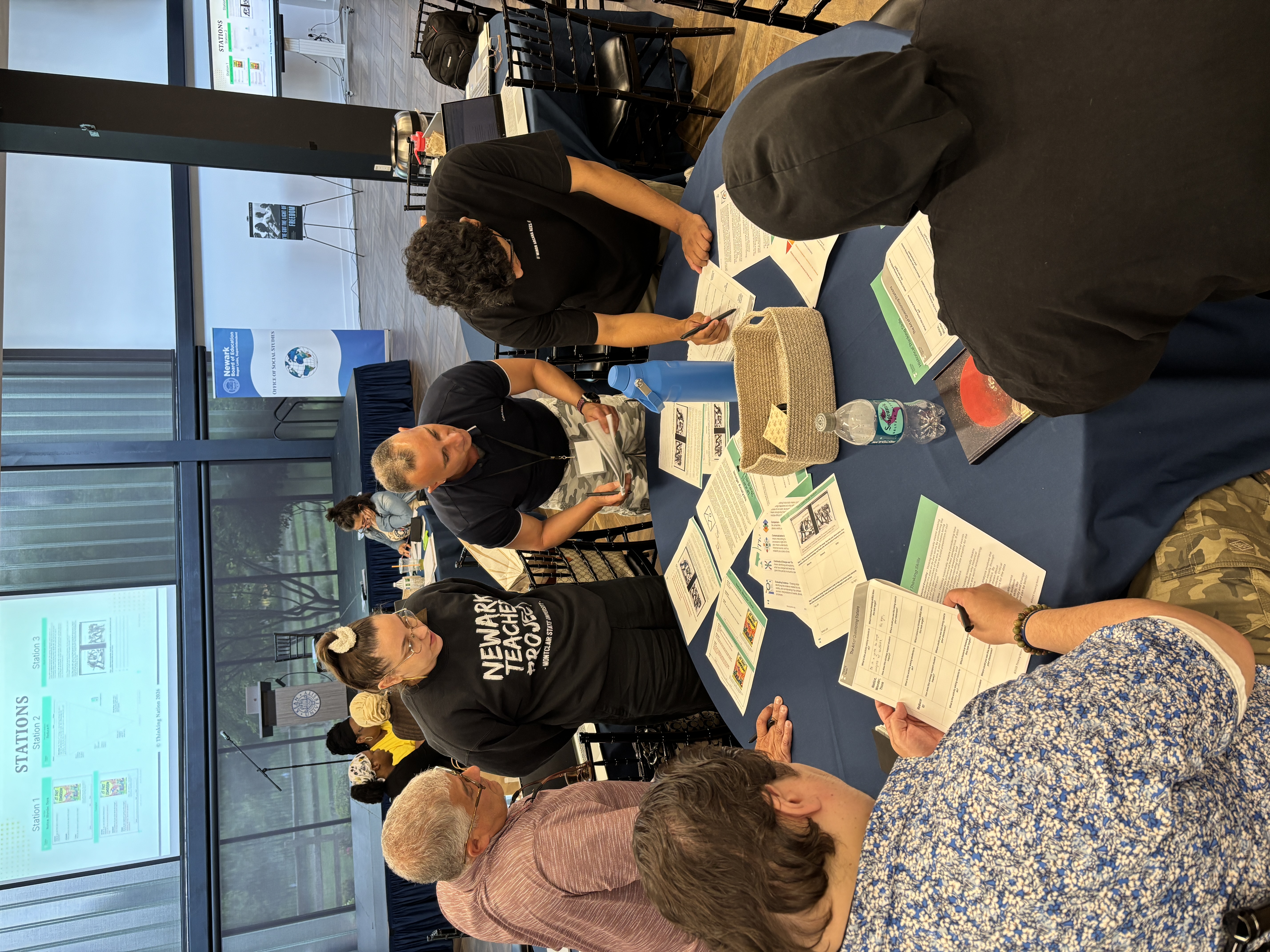
Newark Public Schools Teachers collaborating around historical thinking activities
If you need a kickstarter, check out this free protocol for facilitating effective Professional Learning Communities, or PLCs. By pairing this protocol with a focus historical thinking skill, teachers can collaborate without needing to teach the same content. This is how we build vertical alignment!

Post a comment